
For EHS leaders, Safety Managers, and HR executives, especially in manufacturing, prevention has long been the central tenet of a strong safety strategy.
Ergonomic assessments, stretching programs, fit-for-duty exams, safety training, wearable technology, and wellness initiatives all play an important role in reducing risk. But despite decades of investment in prevention strategies, musculoskeletal (MSK) injuries remain one of the largest drivers of workplace injury costs and lost productivity. In fact, Liberty Mutual’s Workplace Safety Index continues to rank overexertion, material handling, awkward movements, and falls among the costliest workplace injury categories year after year.
The reality is simple:
You cannot prevent 100% of injuries, because employees don’t only get hurt at work.
They get injured at home. They get hurt in the gym. They aggravate existing conditions by mowing the lawn, moving furniture, coaching youth sports, or simply through the cumulative wear and tear of life.
By the time an employee arrives at work, they don’t bring just their job duties with them, they bring their entire musculoskeletal history. That’s why the most effective workforce health strategy isn’t solely preventative.
It’s cyclical.
The Problem with a Prevention-Only Mindset
Most workplace safety programs are designed around one question: “How do we keep injuries from happening?” That’s important. But a more strategic question is: “How do we keep employees productive regardless of where they are in the injury cycle?”
Consider the three phases every employee experiences:
Phase 1: Prevention – The employee is healthy but exposed to physical demands.
Phase 2: Early Intervention – Discomfort, fatigue, mobility restrictions, and minor pain begin to appear.
Phase 3: Recovery and Restoration – An injury exists and productivity, morale, and performance are impacted.
Most prevention programs focus almost exclusively on Phase 1. The challenge is that workers spend significant time in Phases 2 and 3 as well. When organizations lack a solution for those phases, minor issues can evolve into recordables, workers’ compensation claims, lost time incidents, turnover, and reduced productivity.

Why ART Is Different
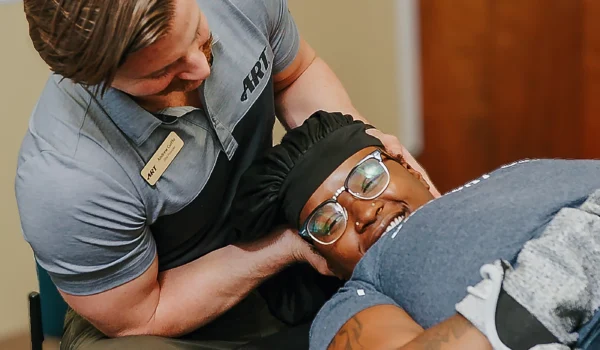
Active Release Techniques (ART) is often viewed as a reactive solution; a treatment used after pain develops. That perception misses its greatest value. ART addresses all three phases of workforce health.
Prevention – ART helps identify and address soft-tissue tension, movement restrictions, and biomechanical dysfunction before they become injuries.
Intervention –When employees begin experiencing discomfort, ART provides a rapid, hands-on solution that addresses the source of the issue rather than simply recommending rest or generic stretching.
Restoration –When injury has already occurred, ART helps restore movement, reduce pain, and accelerate return-to-work readiness.
In other words: ART doesn’t just prevent injuries. ART helps solve them. And ART solves them on site.
And that’s a critical distinction.
Sources: Liberty Mutual Workplace Safety Index, Clearly Insurance PDF